Where gabion boxes, revet mattresses, sack gabions, facia units and rockfall netting are used — rivers, roads, slopes and floods — and which unit each job needs.
Tap an application to jump to how it works.
| Application | Gabion Box | Revet Mattress | Sack Gabion | Facia Units | Rockfall Netting |
|---|---|---|---|---|---|
| River Training & Bank Protection | ✓ | ✓ | ✓ | ||
| Retaining Walls | ✓ | ✓ | |||
| Reinforced Soil Walls & Steep Slopes | ✓ | ||||
| Slope Protection & Erosion Control | ✓ | ✓ | |||
| Rockfall Protection | ✓ | ||||
| Check Dams & Weirs | ✓ | ✓ | |||
| Channel Lining & Drains | ✓ | ✓ | |||
| Bridge Piers, Abutments & Scour | ✓ | ✓ | ✓ | ||
| Flood Emergencies & Underwater Works | ✓ | ||||
| Landscaping & Architectural Walls | ✓ |
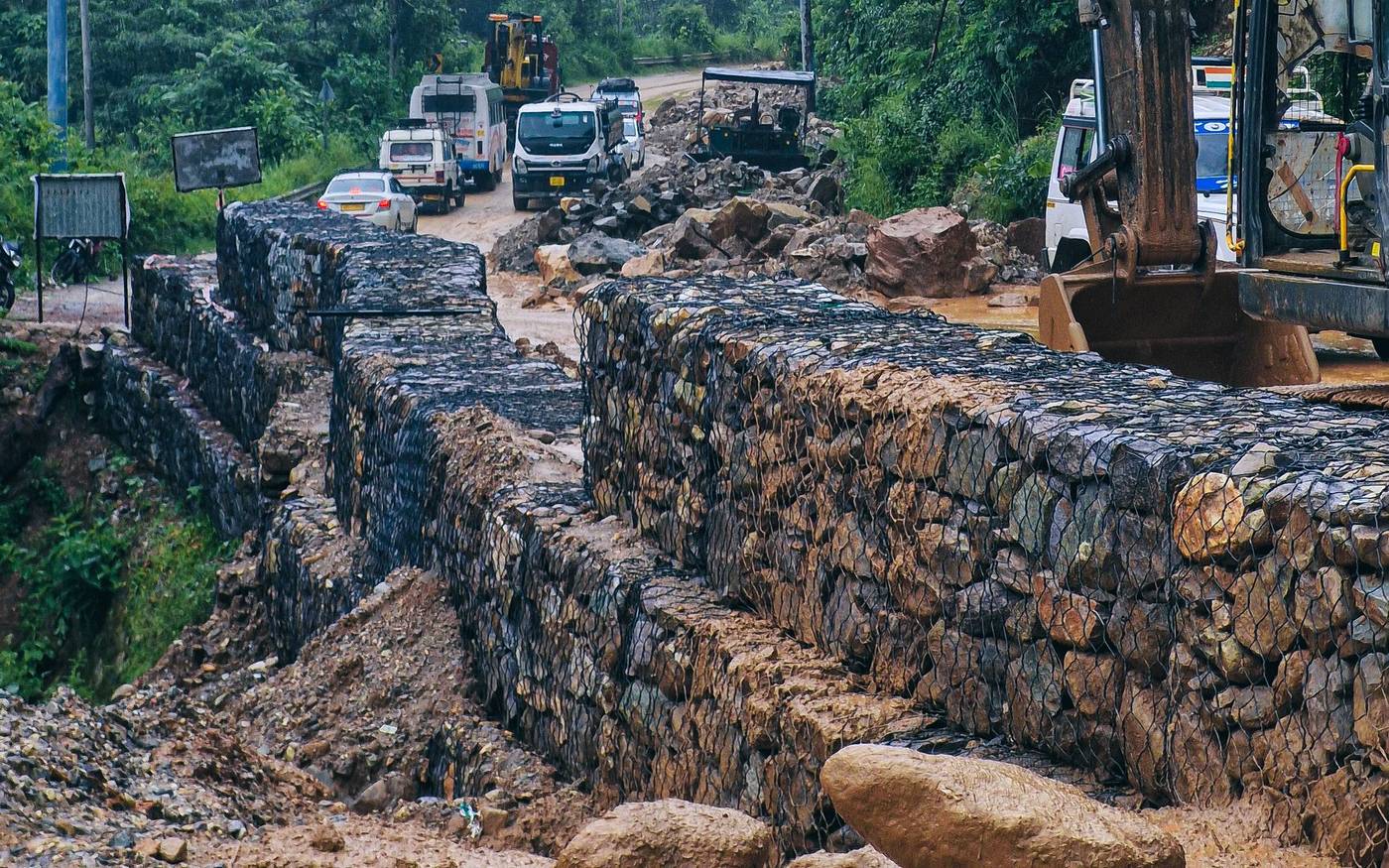
Rivers that carry heavy monsoon flows — the Brahmaputra and its tributaries, the Teesta and the rivers of the Dooars — undercut their banks and move sediment every season. Gabions control that erosion by stabilising banks, guiding flow and reinforcing embankments.
Loose stone pitching only works when stones are big enough for the current. The CWC handbook for flood management works recommends smaller stones filled in GI wire crates when the required stone is too heavy to handle or not available — and river boulders too rounded for loose pitching can be used inside them.
Gabion box walls hold the bank face; revet mattresses laid flat armour the bed and the lower slope against scour; sack gabions protect the toe where it sits below water. Because every unit is flexible, the protection settles with the bank instead of breaking away from it — and it supports vegetation growth over time.
Retaining walls hold back soil, stabilise uneven terrain and create usable land on hill roads, railway formations and building sites. Built from gabion boxes, they act as gravity structures: the weight of the stone fill resists the lateral pressure of the soil behind.
Gabion walls are free-draining, so water pressure never builds up behind them, and flexible, so they tolerate settlement without cracking. They need no formwork or curing, and the fill stone is often available near the site. Where a wall must be taller than a gravity section allows, facia units with reinforcing tails take over. See the gabion wall design guide and gabion wall vs RCC.
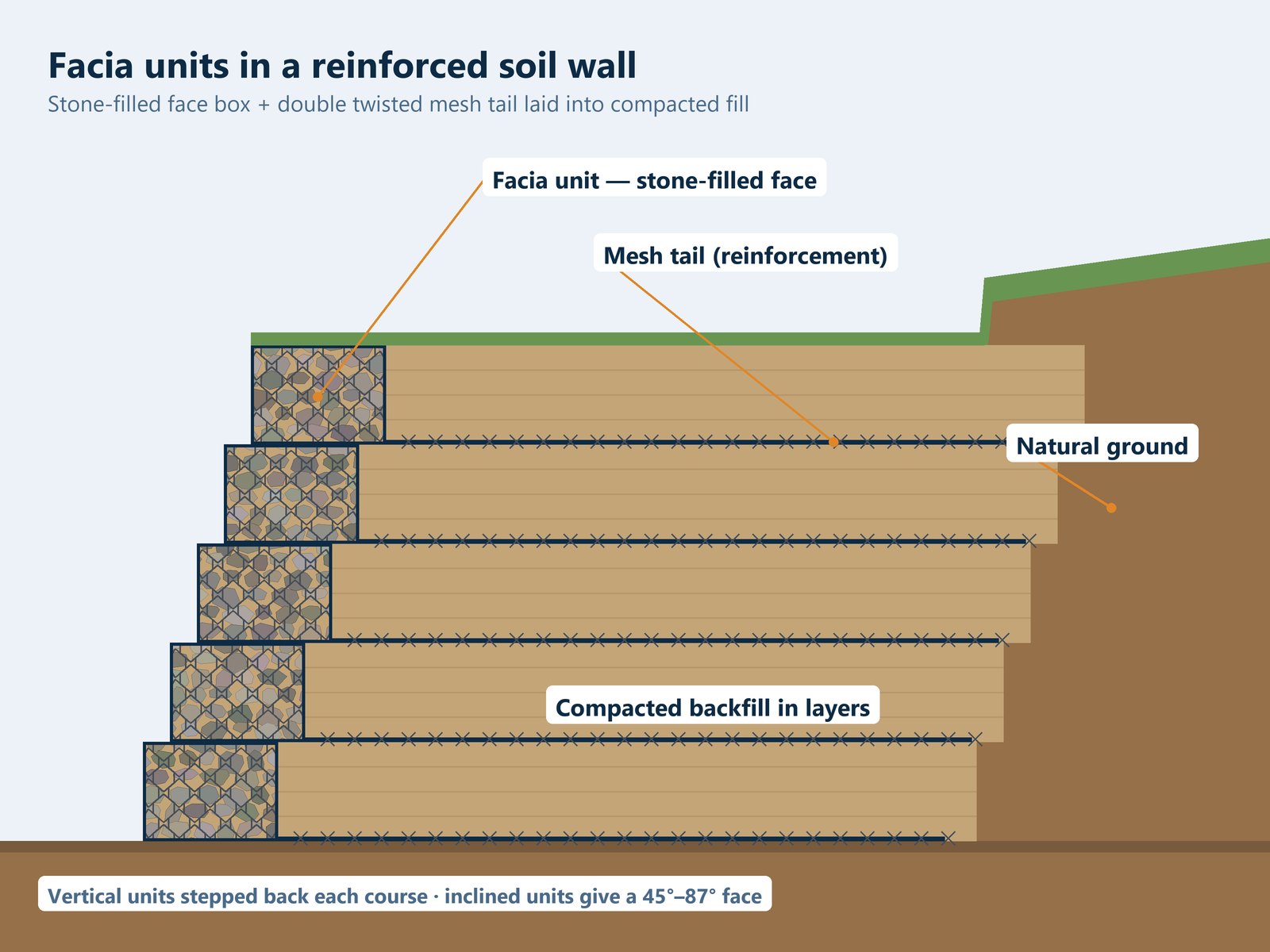
A reinforced soil structure uses the backfill itself as the retaining mass. Facia units provide the stone-filled face, and their double twisted mesh tails are laid between layers of compacted fill so soil and mesh work together.
Vertical units build stepped or near-vertical walls for road widening on hill sections, bridge approaches and embankments. Inclined units, from 45° to 87°, give a steep slope a vegetated face — and failed hillsides can be rebuilt using the displaced soil as fill.
Gabions act as soil stabilisers on embankment slopes, road cuttings and around bridge piers and abutments. As flexible, anchored mesh systems they stop soil moving under heavy rain and man-made disturbance.
Revet mattresses cover the slope face like a blanket; gabion boxes at the toe give it a firm footing, and a filter layer beneath the units stops the soil washing out through the stone.
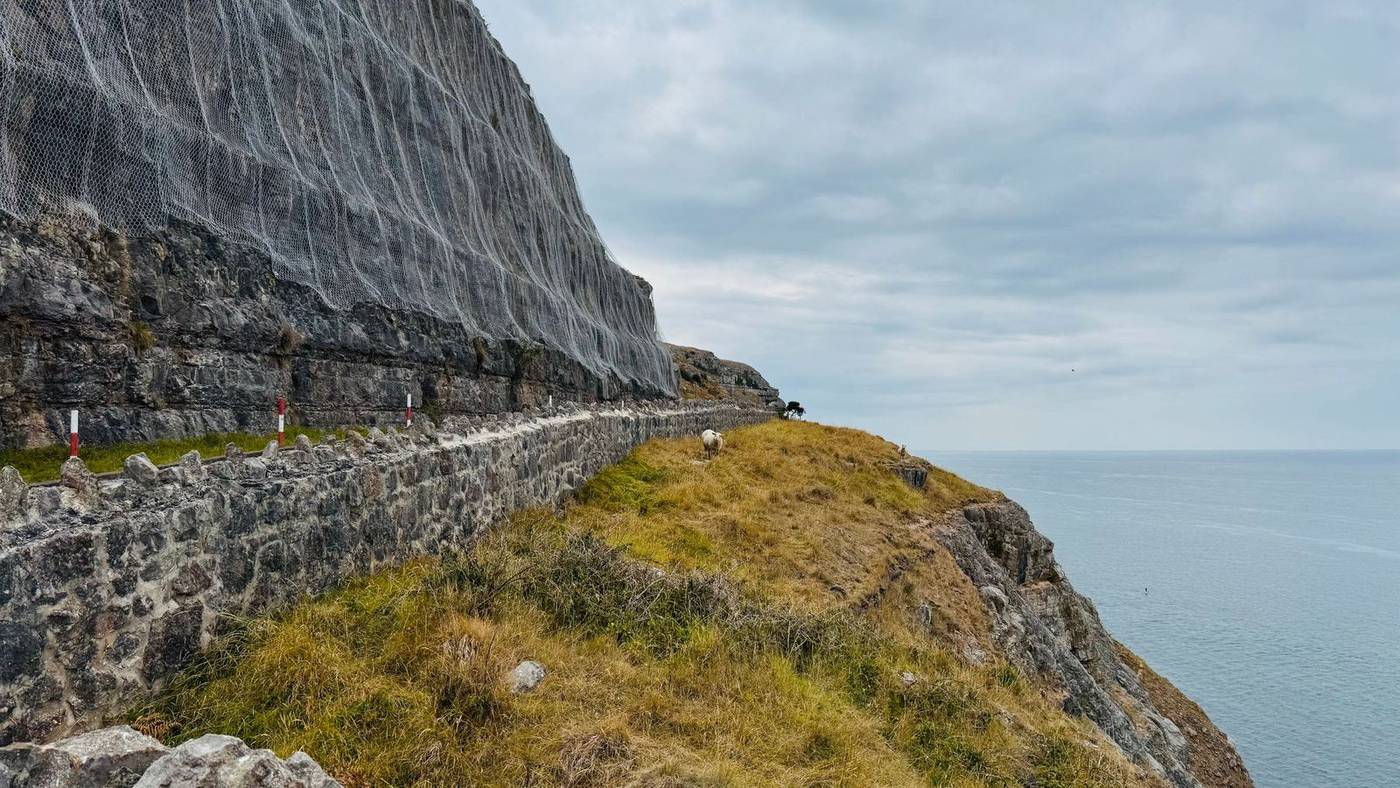
On rock cuttings above roads and railways, loose rock detaches with rain, frost and vibration. Rockfall netting draped from the crest holds it against the face and guides it down to a catch ditch at the toe, rather than letting it bounce onto the carriageway.
Because the mesh is double twisted, a wire cut by a sharp rock does not unravel the net. Rolls are joined edge to edge to cover large faces, and higher-energy slopes combine the netting with anchors and cables designed for the site.
Gabion check dams slow stormwater runoff, trap sediment and reduce soil erosion in streams and gullies, and they help recharge groundwater. They are a reliable, low-maintenance choice in all types of terrain.
The dam body is built from gabion boxes; a revet mattress apron downstream absorbs the energy of water falling over the crest so it cannot scour out the foundation. See the gabion check dam guide.
Lining canals, drains and culvert outfalls with gabions has clear advantages over concrete: the lining resists weed growth, is easier to maintain over the years, follows the channel profile and needs much less material than a concrete section.
Revet mattresses line the bed and side slopes; gabion boxes form vertical channel walls where space is tight.
Flowing water accelerates around bridge piers, abutments, spurs and culverts and digs scour holes that can undermine the structure.
Revet mattresses laid around the foundation armour the bed; gabion boxes protect abutments and wing walls; sack gabions fill existing scour holes and protect foundations below water level.
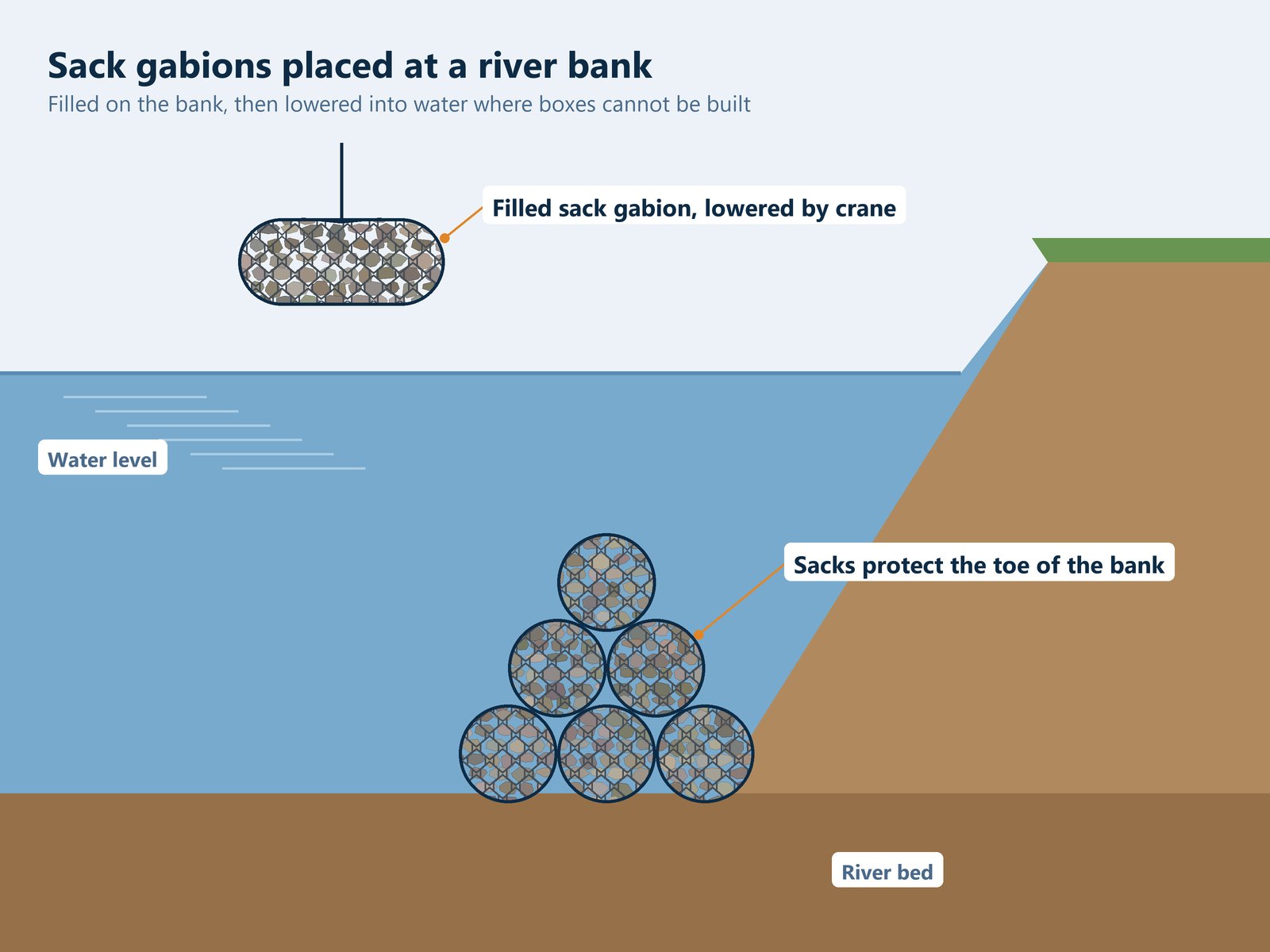
When an embankment breaches in a flood, there is no time to build boxes in the dry. Sack gabions are filled on the bank or on a barge and lowered straight into flowing water.
They close breaches, build up underwater foundations and repair scour quickly — and they conform to an uneven bed as they settle.
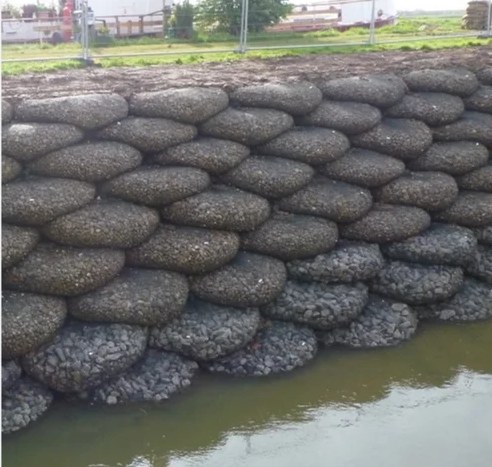
Gabion walls combine function with appearance — terraces, boundary walls, slope features and screens. Durable and eco-friendly, they support plant growth, prevent soil erosion and stabilise terrain while giving a natural stone finish.
Indicative figures from IRC:SP:116-2018 and the CWC flood-management handbook. They help with early sizing and checking a BOQ — every structure still needs a site-specific design.
Base width about 0.6–0.75 × wall height for walls up to 6 m, and 0.55–0.65 × height for 6–10 m. Embed at least 0.5 m (1 m for walls over 6 m) and give the face a 3–6° batter, or step the courses back on the outside.
Hard, durable stone 1.5–2.5 times the mesh opening, hand-packed with the long side horizontal. Aim for at least three layers of stone in a 1 m unit and two in a 0.5 m unit or 0.3 m mattress. Well-packed units reach 35–40% voids.
Chosen from flow velocity, bank slope and soil. Indicative limiting velocities: 0.17 m mattress about 4.2–4.5 m/s, 0.23 m about 5.5–6.1 m/s, 0.30 m about 5.5–6.4 m/s, and 0.5 m gabions about 7.6–8.0 m/s — then checked for tractive shear.
Laid at low water level so the units can launch down the face of a scour hole, at a slope of about 2H:1V. The apron width is sized from the expected maximum scour depth — typically 1.5 times the maximum scour depth below low water.
Where loose stones of the required weight are too heavy to handle or not available, use smaller stones in wire crates, laid with the long side down the slope and tied to each other. The mesh opening must be smaller than the smallest stone.
Poor data and design, poor workmanship (backfill and compaction not raised with the wall), badly galvanised wire, an unprepared foundation, and poorly graded or badly packed stone.
Tell us your dimensions, wire specification and quantity — we'll come back with a quotation and lead time.

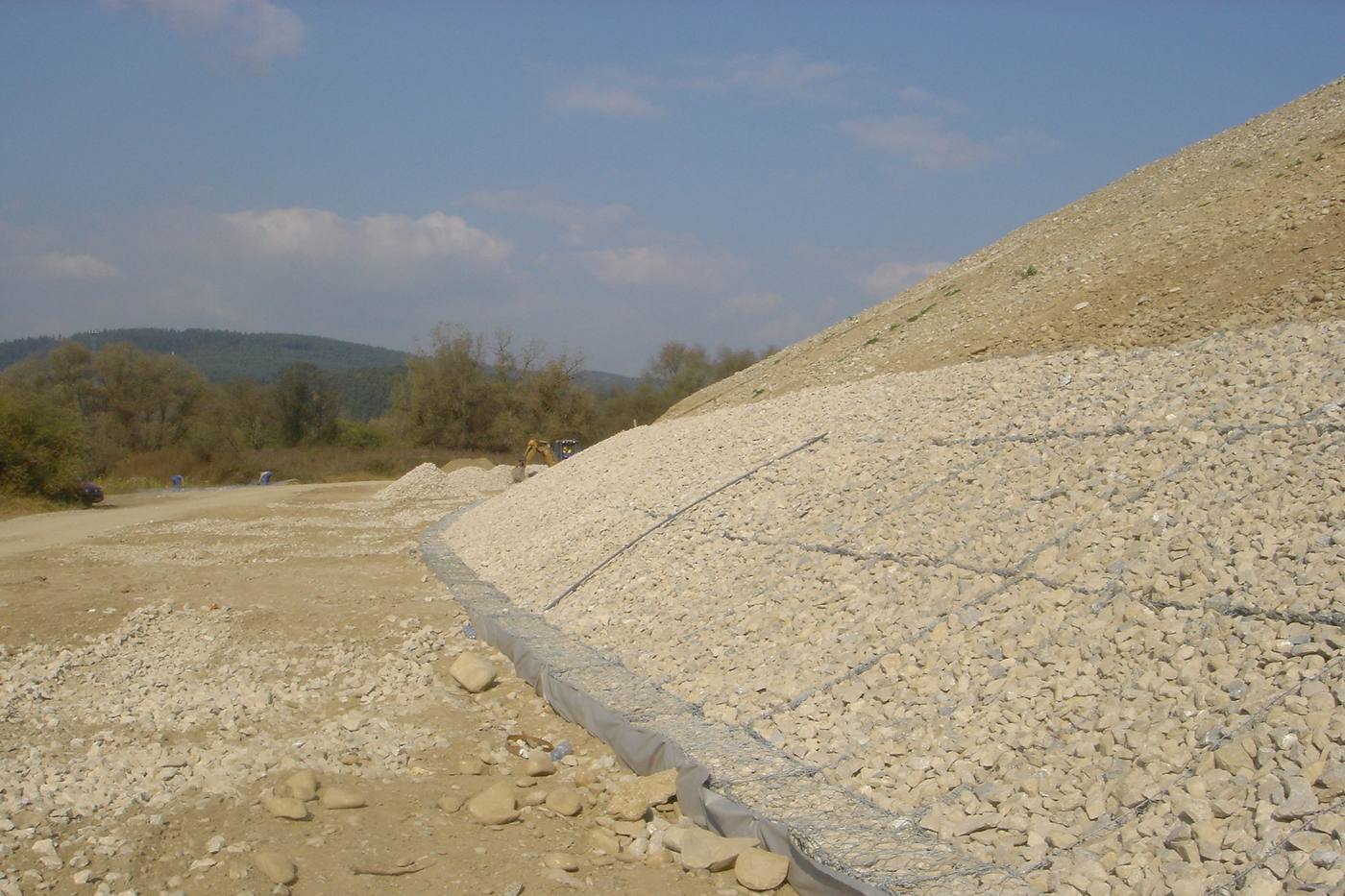 Photo: